It is believed that Brač became an island twenty to thirty thousand years ago, when the Dalmatian mainland sank, when the hills and mountains became islands, and the coastal valleys became sea channels. At the beginning of the 15th century, none of the twelve Brač settlements were on the coast, but rather in the interior of the island. The coast was dangerous for life, due to frequent pirate attacks, and the old inhabitants of the island were mainly engaged in island livestock farming. It was not until 1444, when Omiš also recognized Venetian rule, that the danger of piracy subsided and life along the coast became safer.
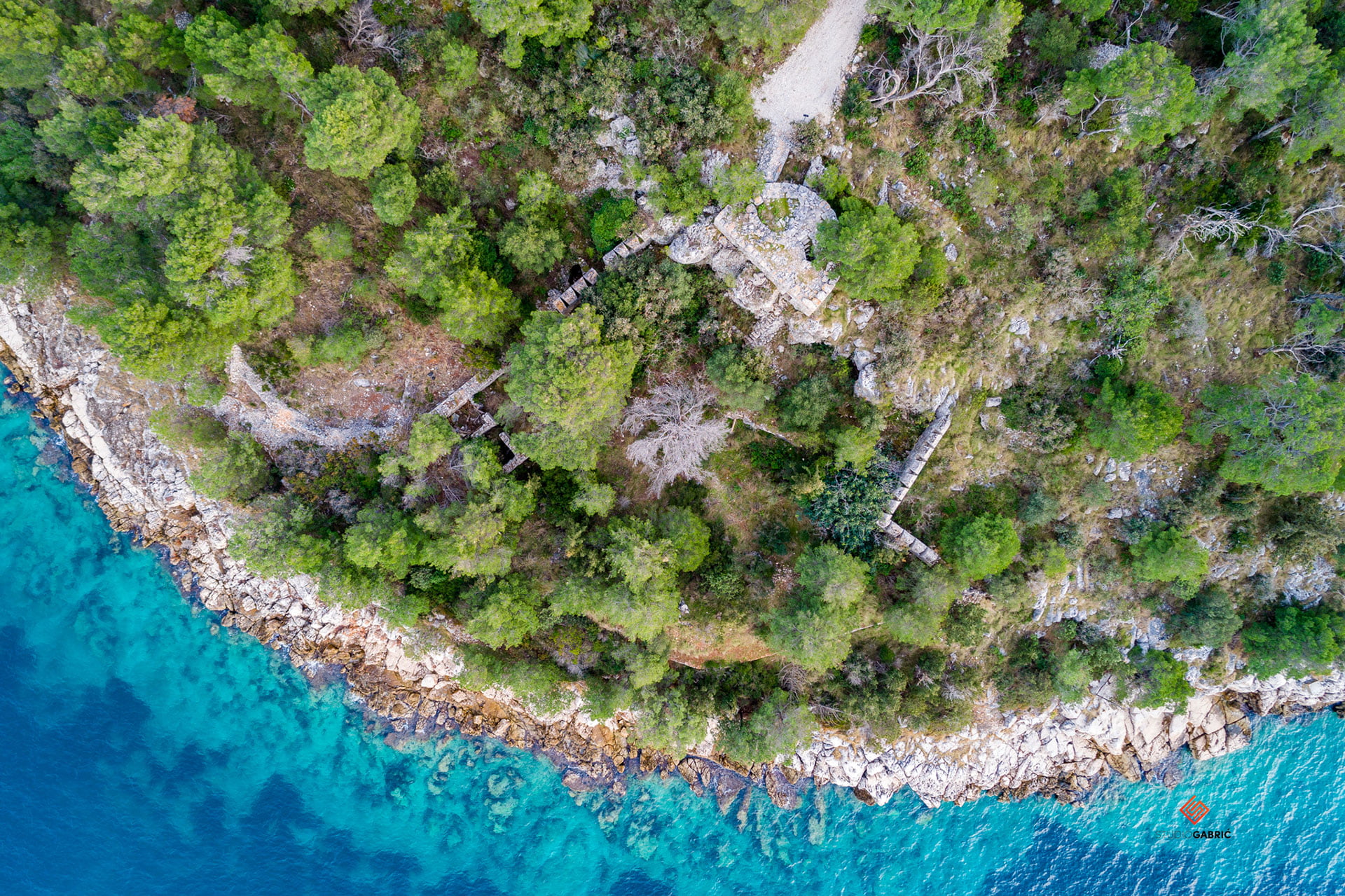
The settlement of Milna developed at the turn of the 16th and 17th centuries from immigrants from Nerežišće, who settled around the fortified castle of the Cerinić family, which the people call Angliština, as well as the small church of St. Mary, today the sacristy of the parish church. The development of coastal island settlements that arose around noble castles was also contributed to by the large influx of refugees from the Turks during the 17th century, when families from Poljice, the Makarska Riviera and Herzegovina settled on the island.
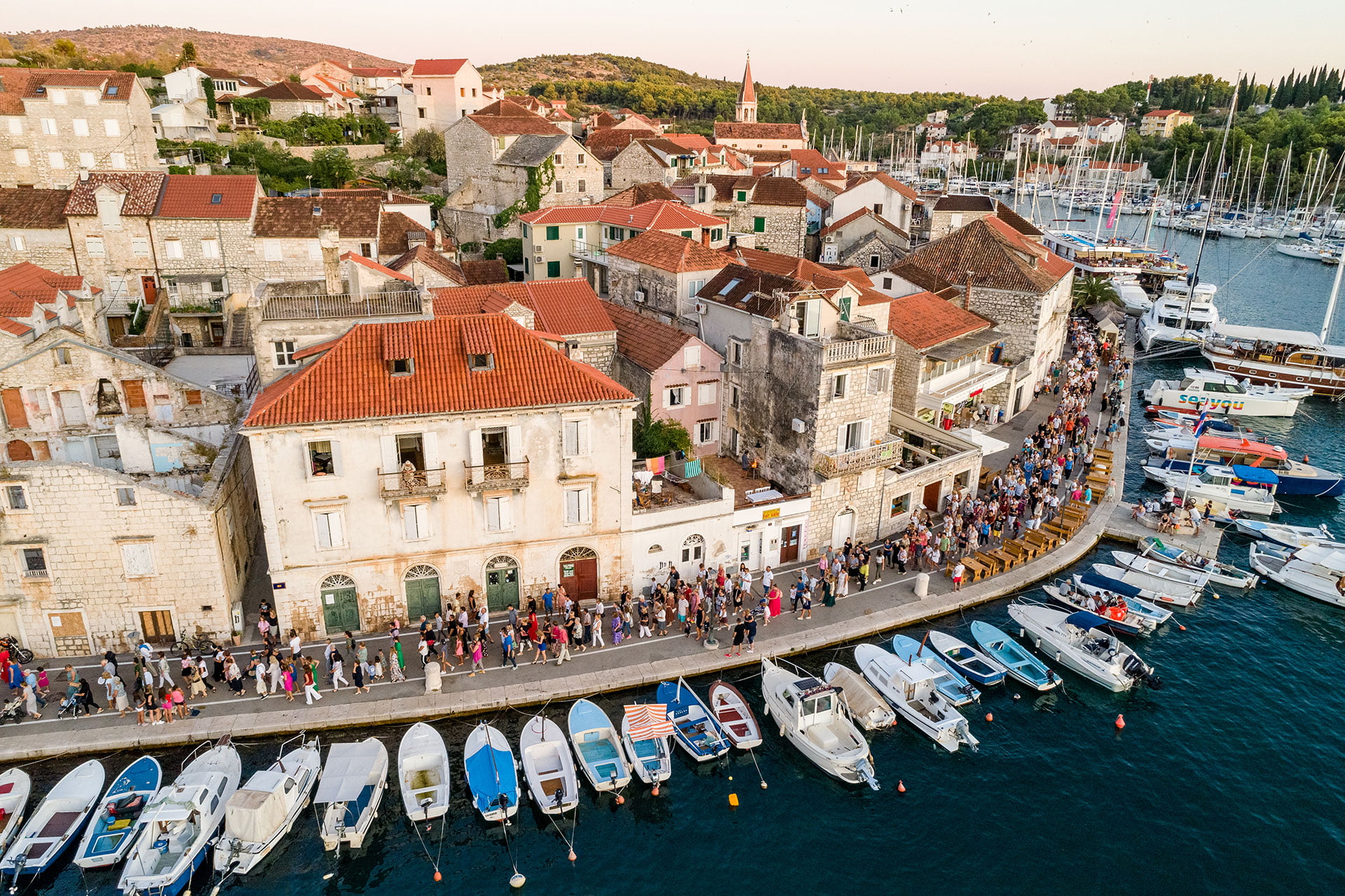
Milna was a distinctly bourgeois settlement, with small stone houses strung together at the bottom of a deep bay, forming a crescent-shaped settlement following the configuration of the harbor. The inhabitants were mostly peasants, fishermen, and sailors; there were almost no noble families in the Milna area.

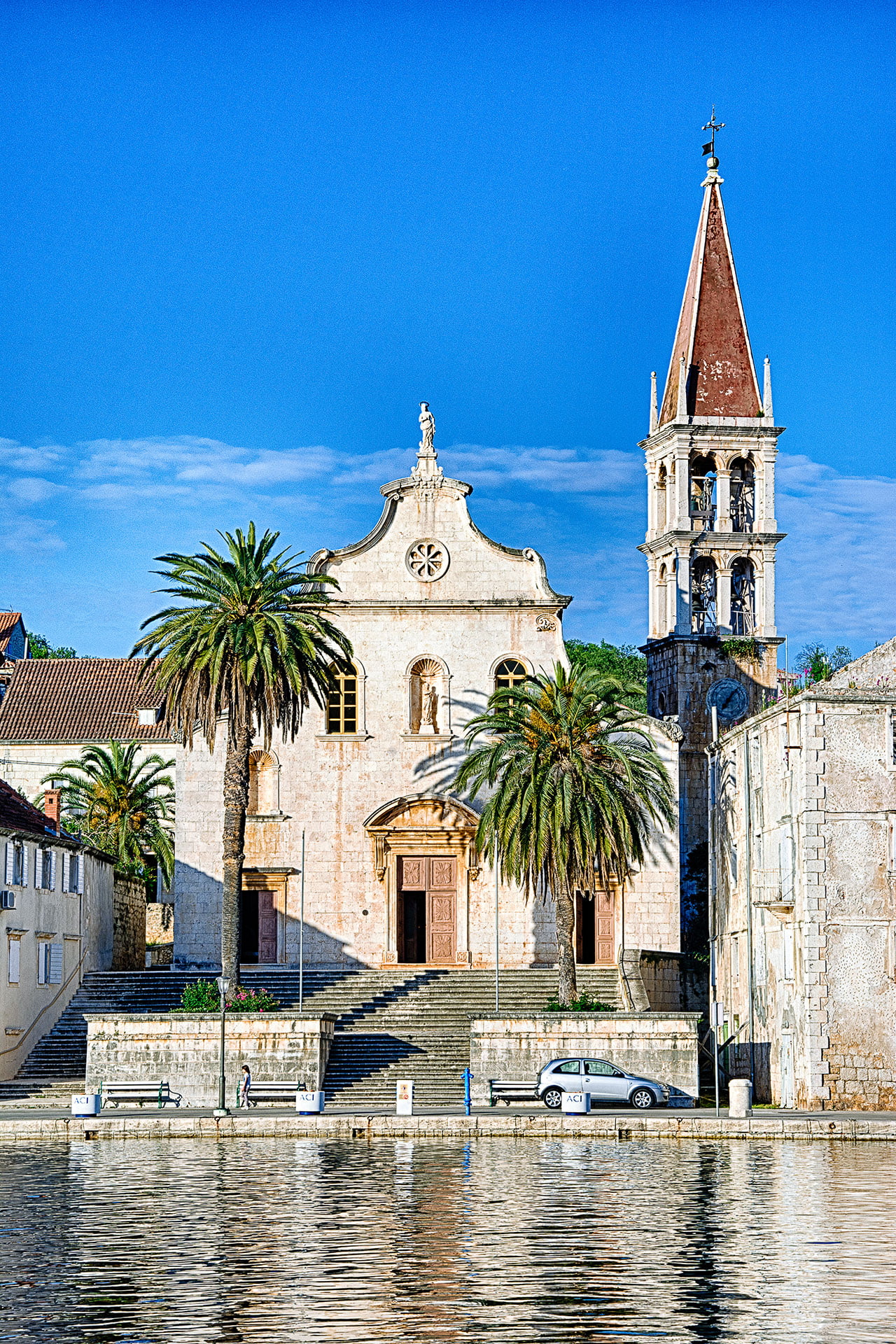
With the Venetian decree of 1717, navigation on the Adriatic became free, and Milna began to develop economically. From the 17th to the 19th century, it became the most developed and busiest port on Brač. In the 18th century, there were two shipyards in Milna: the one owned by the Bonačić-Protti family, in an area called Pantera, which began operating in 1759 (later developed into the “Škver”), and the one owned by the Dorić family, which began operating twenty years later, in 1779, in the Vlaška Bay in an area called Brdo (later moved to the Milna port), which was the forerunner of modern shipbuilding in Milna. Although the “golden age” of shipbuilding in Milna did not last long, about a hundred years, it was very successful, and in 1888, as many as 23 large ships were built in Milna, five of which were owned by the Milna family. In the next hundred years, about a hundred more wooden sailing ships (pulaks, braceras and trabakulas) were ceremoniously sent off from the Milna shipyards. The people of Milna were respected for their skill in building sailing ships, but also as captains, shipowners, sailors, fishermen... Maritimeism accelerated the urbanization of the previously predominantly rural settlement, and the architectural appearance of the center of Milna in the Baroque style was defined. A school, a port office, a church with a bell tower, a parish hall, and a port with a lighthouse were built. In 1900, Milna had about 4,500 inhabitants.
With the invention of the first steamship at the beginning of the 19th century, which quickly replaced the cargo sailing ship, shipbuilding in Milna died out. The people of Milna did not abandon the sea, but turned to fishing. But when at the beginning of the 20th century, the Italian and French vineyards were ravaged by grapevine disease, the hardworking people of Milna cleared and freed their rocky soil and built vineyards. The stone piles and dry stone walls still bear witness to the hard and persistent work of the Milna winegrowers. The planted vineyards, despite the effort, did not bear fruit for long, because the disease spread to that area, which caused a mass exodus of the population. Most of them emigrated to America, where half of the Milna families soon found themselves. Those who remained, although impoverished but persistent, began to engage in fishing.
Although the 20th century did not bring Milna the economic prosperity it deserved, it saved it from unreasonable concreting; the settlement retained the original appearance of a Baroque settlement from the second half of the 18th century. Milna remained the only protected urban entity on the Adriatic, but also wider, in a natural bay, like a pearl of lined stone houses, on the warmest side of the island of Brač, which have withstood all times and preserved their old splendor and the atmosphere of the old Mediterranean.
Today, Milna has developed into the largest port on the island of Brač. It is an almost unavoidable destination and refuge for a large number of sailors, and its economic development is based on mariculture, nautical tourism, and activities related to tourism and the sea.

Milna is located at the bottom of a deep bay on the western side of the island of Brač, facing the island of Šolta. It extends spatially to the entire southwestern side of the island, so that the wider area of Milna can be defined by the boundaries that form the area northeast of Kupinova Bay and the eastern part of Maslinova Bay. This is also the most naturally beautiful part of the island, with numerous deep and sheltered bays, a gentle configuration of the soil and a warm and pleasant climate. In front of Milna is the islet of Mrduja, which in relief belongs to Brač.
Milni, as the center of the Municipality, also gravitates to the areas of Bobovišća, Bobovišća na Moru, Ložišća and Pothuma.
Until the end of the 19th century, the people of Milna, like other inhabitants of Brač, lived from viticulture, seafaring, fishing and cattle breeding. Already at the beginning of the new century (partly due to economic and partly due to war events) the economic situation was changing; old activities and crafts were dying out, and the people of Milna turned to the sea. Milna is one of the safest anchorages on the western side of the island, in the immediate vicinity of the sea passage called Splitska vrata, an extremely important traffic route leading to the port of Split. It developed into the maritime center of the island, and its inhabitants, living by the sea, learned to live from the sea, because maritime culture and life from the sea is the generational heritage of the people of Milna. Today, Milna is economically oriented towards the sea and tourism, especially nautical, but also to other service activities related to tourism, nurturing its maritime and fishing tradition.
There is no industry in Milna. The fish farm was moved outside the settlement to the uninhabited Maslinova Bay, while the shipyard retained only its basic activities (ship overhaul and repair, as part of the ACI marina). Three marinas are open in Milna all year round, allowing domestic and foreign ships to enter without restrictions.
| Cookie | Duration | Description |
|---|---|---|
| cookielawinfo-checkbox-advertisement | 1 year | This cookie is set by the "GDPR Cookie Consent" plugin to record user consent for cookies in the "Advertising" category. |
| cookielawinfo-checkbox-analytics | 1 year | This cookie is set by the "GDPR Cookie Consent" plugin to record user consent for cookies in the "Analytics" category. |
| cookielawinfo-checkbox-necessary | 1 year | This cookie is set by the "GDPR Cookie Consent" plugin to record user consent for cookies in the "Necessary" category. |
| cookielawinfo-checkbox-performance | 1 year | This cookie is set by the "GDPR Cookie Consent" plugin to record user consent for cookies in the "Performance" category. |
| PH_HPXY_CHECK | session | This cookie stores information about the user's current session. |
| Cookie | Duration | Description |
|---|---|---|
| cookielawinfo-checkbox-functional | 1 year | This cookie is set by the "GDPR Cookie Consent" plugin to record user consent for cookies in the "Functional" category. |
| cookielawinfo-checkbox-others | 1 year | No description |